

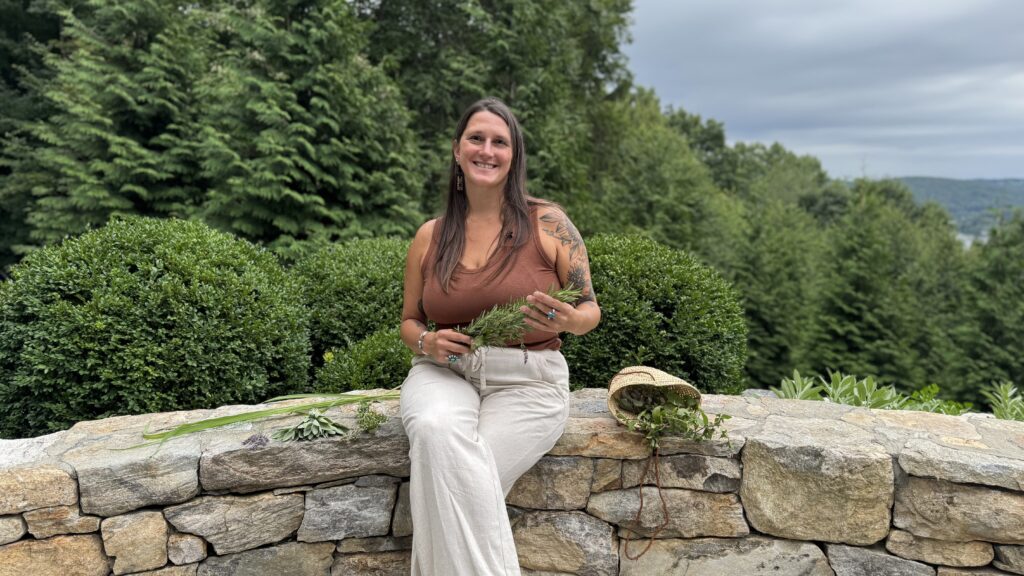
 Adaptogens vs. Nervines: Herbs for Stress & Nervous System Support
Bring herbalism from the garden into the kitchen
Once you begin noticing plants, the next question is practical: how do you prepare them? In this beginner-friendly Earth Medicine lesson, Dr. Lindsey introduces common herbal preparations and explains why the form you choose matters.
Disclaimer: If you are recovering from an injury, pregnant, postnatal, nursing or elderly, or have recurring or chronic pain, or any circumstance, consult your doctor for approval concerning your voluntary participation. Instructions provided on the Gaia Goddess Lifestyle platform and elsewhere are in no way intended as a substitute for medical advice. Participation is done at your own risk.
Start with the simplest preparation: tea
The lesson begins with teas and infusions, one of the most accessible ways to work with herbs at home. You’ll explore hot and cold infusions, aromatic herbs, color-rich teas and the simple practice of covering some aromatic teas while they steep.
Understand the major extraction methods
From there, the lesson moves through tinctures, glycerites, vinegar preparations, infused herbal oils and salves. A foundational principle runs through each method: different liquids extract different profiles of plant constituents, so water, alcohol, glycerin, vinegar and oil are not interchangeable.
Dry, label and store what you make
The lesson closes with practical guidance for drying aromatic herbs, labeling jars and thinking seasonally about preservation. The goal is not to turn your kitchen into a laboratory; it is to make herbal practice understandable enough to become part of real life.
A note on safety
Herbs and concentrated extracts can interact with medications and may not be appropriate for everyone. Use herb-specific contraindication information, follow a reliable formulation or product label, and consult a qualified health professional when appropriate.
What You’ll Learn
- How teas and infusions differ from other herbal preparation methods.
- Why water, alcohol, glycerin, vinegar and oil extract different profiles of plant constituents.
- What tinctures and glycerites are and why formula-specific dosing matters.
- The difference between infused herbal oils and essential oils.
- How an infused oil can become the base for a salve.
Simple ways to dry, label and store herbs.
- Why medication interactions and herb-specific contraindications matter.
- Benefits of This Learning Experience
- Understand the vocabulary of common herbal preparations.
- Choose simpler forms that fit realistically into everyday life.
- Build safer habits around labeling, storage and concentrated products.
- Create a foundation that makes the rest of the Earth Medicine series easier to follow.
About Dr. Lindsey Chmielewski
Dr. Lindsey Chmielewski brings a relationship-centered approach to herbal education, weaving practical plant knowledge, seasonal observation and traditional frameworks into everyday ways of working with herbs. In this Gaia Goddess series, she guides viewers through garden and kitchen practices designed to make Earth Medicine more approachable while emphasizing respect for plant traditions, individual context and safety. Publishing note: replace or expand this paragraph with the practitioner’s formally approved credentialed bio once her exact name spelling and credentials are confirmed.
More from Dr. Lindsey Chmielewski
Adaptogens vs. Nervines: Herbs for Stress & Nervous System Support

 Herbs for Immune Support: Make a Seasonal Fire Cider
 Herbalism for Beginners: Build a Relationship With Plant Medicine

